Affiliate marketers love shiny new affiliate tools. One moment you’re running a clean setup, and the next you’ve adopted eight plug-ins, three dashboards, and two “AI-powered” add-ons.
The truth is that most affiliate programs are running 8–12 tools when they only need 3–4. Everything else just creates noise, confusion, and never-ending reconciliation.
A modern affiliate tech stack should be simple: track referrals accurately, automate commissions and payouts, prevent fraud, and give partners what they need.
This guide breaks down the core layers of a clean affiliate marketing toolset: foundation, growth, and advanced, so you know exactly what belongs, what doesn’t, and how to rebuild something that actually works.
The “Everything Stack” Problem
We all get a little excited about our elaborate setups, until we realize it's really just dashboards and Zapier chains held together by wishful thinking and coffee.
What looks like management is actually performance art. Before you know it, you're managing the tools instead of the program.
Your headaches usually come from:
- Three different commission totals depending on which tool you check.
- Payouts delayed because data doesn't sync automatically.
- Affiliates confused about which dashboard shows what.
- Hours spent reconciling discrepancies instead of recruiting partners.
If you feel like you need 15 tools to get the data to make one decision, you need to rethink your affiliate tech stack.
The Modern Affiliate Tech Stack Framework
Before diving into the specific tools, it helps to understand the shape of a modern affiliate program setup. The best programs aren’t built on 12 apps; they’re built on a simple, layered framework that grows with your maturity level.
Here’s the structure most high-performing programs follow:
Layer 1: Foundation (The Non-Negotiables)
The essentials every affiliate or referral program needs from day one:
- Tracking and attribution.
- Automated commissions.
- Built-in fraud prevention.
This layer lets you run a clean program based on trustworthy data.
Layer 2: Growth Tools (Add As You Scale)
Once you’ve passed the “is this thing working?” phase, you can add:
- CRM enrichment to understand partner quality and customer value.
- Analytics and reporting dashboards for performance insights.
- Affiliate dashboards so partners can self-serve their stats.
These affiliate marketing tools support growth without adding unnecessary overhead.
Layer 3: Advanced Tools (Use Only If They Earn Their Place)
When you’re managing hundreds or thousands of partners, you may reach a stage where optional tools start to make sense. These include things like:
- Partner discovery platforms.
- Advanced attribution modeling.
- Automated reporting workflows.
These affiliate marketing tools can become useful at scale, but only if they directly improve revenue. Most programs don’t need every tool in this layer.
If you build your affiliate tech stack around this model, the foundation stays strong, and everything else becomes optional.
What Actually Needs To Be in Your Affiliate Tech Stack
A strong affiliate marketing tech stack should give you the power to act quickly and with confidence. That's it.
This is actually good news. You don't need a bunch of tools undermining each other, or systems that only "talk" to each other if you manually copy data between them.
Here’s what should be in your toolkit.
1. A Tracking and Attribution Tool You Can Trust Blindly
Without reliable attribution, nothing else matters. Your program will simply not survive without a tracking tool.
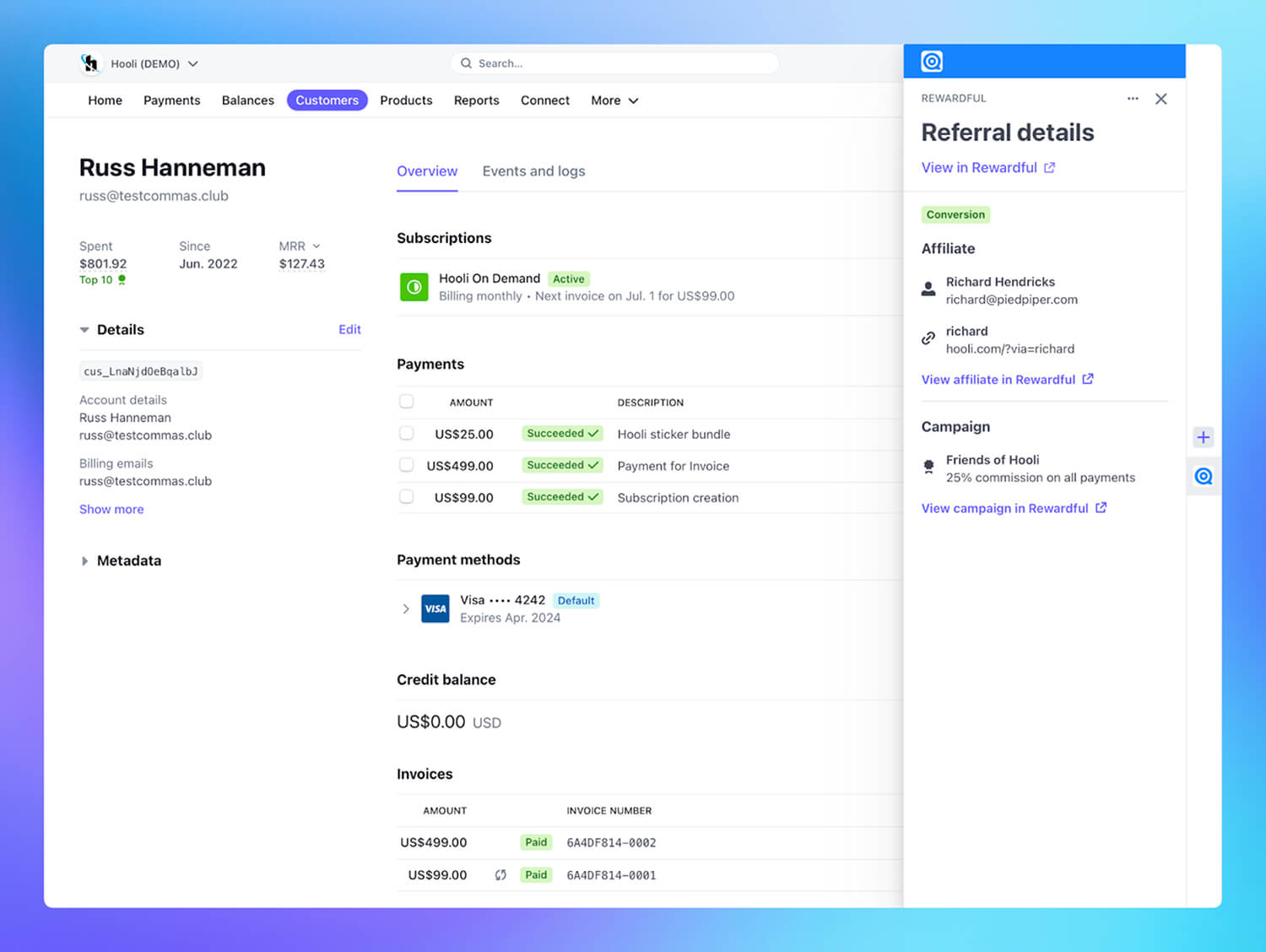
Rewardful integrates directly with Stripe, tracking every referral, refund, renewal, and cancellation automatically. When a customer upgrades or gets a refund, commissions adjust in real time without someone having to triple-check it or jump in with a manual intervention.
But we're not the only tool out there, and nor do we pretend to be the best for everyone. We're great for SaaS. Maybe your business is the furthest away from that. That's fine.
Whichever tool you choose, make sure it does one thing well: tell the truth.
2. Automated Commission and Payout Workflows
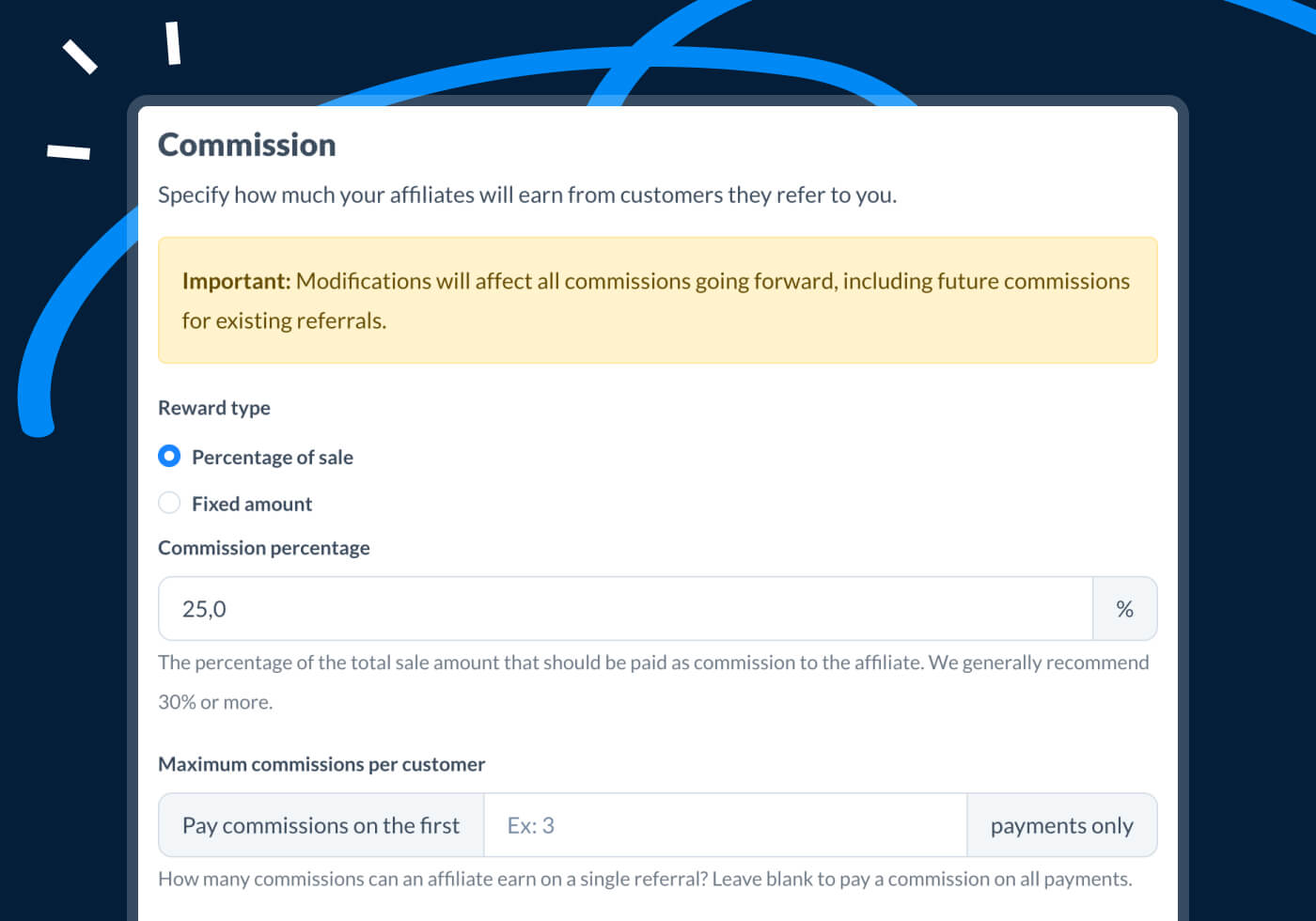
Manual commission calculations break down fast. A 20% recurring commission sounds simple until you factor in upgrades, downgrades, refunds, annual vs monthly plans, and failed payments.
Spreadsheets can't keep up. Neither can you.
One mistake can ruin a relationship with a well-connected affiliate. And when that happens, you shouldn't be scared of them no longer talking about your program. That would be the best-case scenario, if you catch our drift.
Rewardful handles commissions automatically. Everything is tied to actual Stripe payments, adjusts for refunds, and handles recurring revenue without manual tracking. When it’s time to pay out, you click once and send batch payments through PayPal or Wise.
If you’d rather not run batch payments yourself, Managed Payouts lets you fund a single payment to Rewardful, then we handle the payout logistics and affiliates withdraw via PayPal or bank transfer (including SEPA).
That’s modern payout and commission automation done right.
3. Fraud Detection That’s Built In, Not Bolted On
Self-referrals, duplicate accounts, fake traffic. They aren't theoretical affiliate marketing problems. They happen in every program that grows past 50 affiliates. Don't think your business is immune to it. It happens to the biggest ones, and the most boring ones, too.
Catching fraud after the fact means clawing back payments and burning relationships. Preventing it means having detection rules from day one.
Rewardful automatically flags:
- Self-referrals.
- Unusual patterns.
- Suspicious conversions
- Duplicated accounts.
If you don't have a clear answer ready on how you are preventing fraud, or what happens when it does occur, it's time to update your tech stack to something you truly understand.
4. A Single Source of Truth for Affiliates
You’d be amazed at how many programs lose momentum because affiliates:
- Can’t find their links.
- Use tracking URLs that expired last year.
- Have no idea what their earnings actually are.
Affiliates shouldn’t have to email you for their stats. They shouldn’t need three different logins for earnings, conversion metrics, and your asset folder.
Rewardful gives each affiliate their own dashboard with live data: referrals, conversions, commissions earned, and payout schedule. No delay.
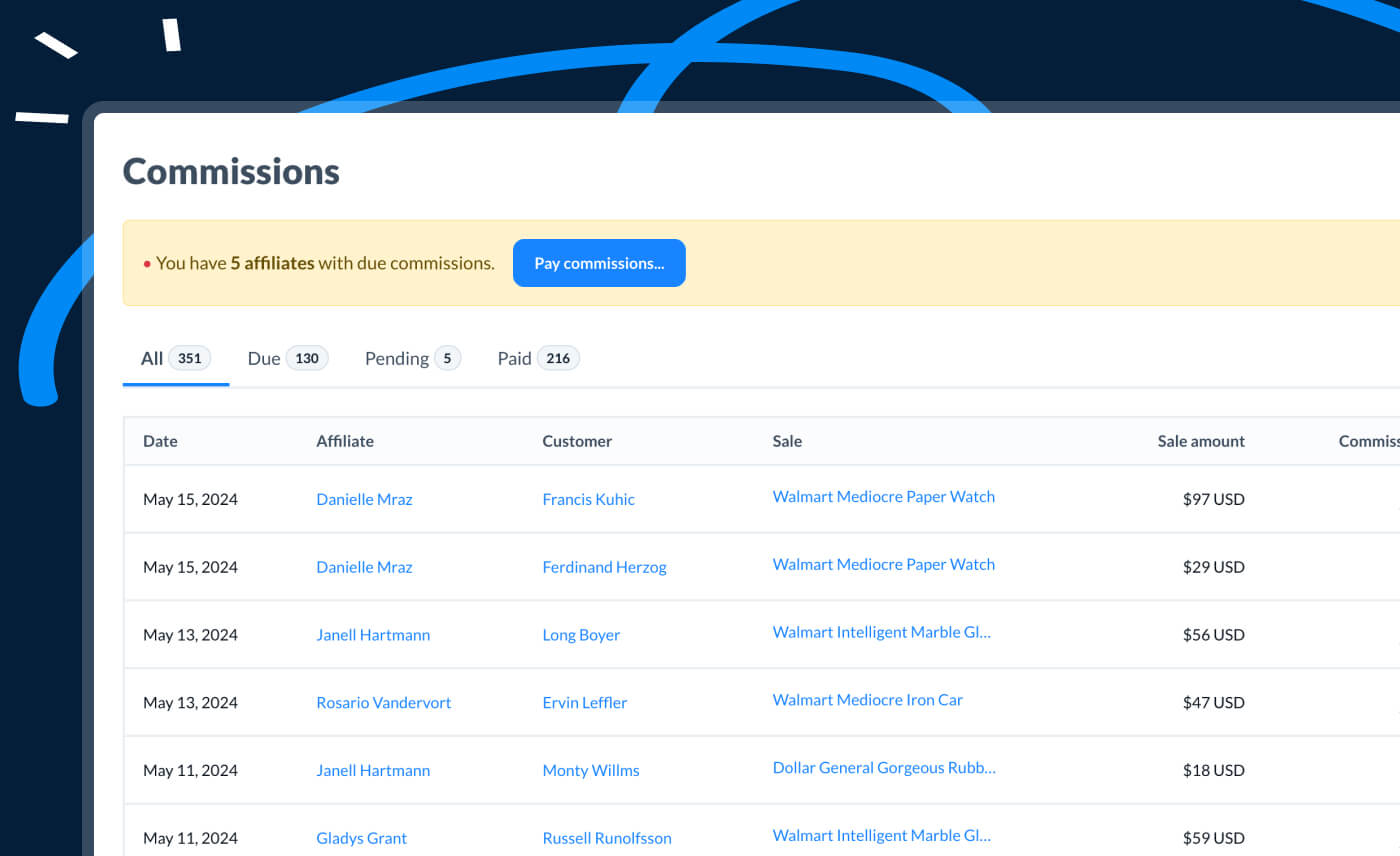
When affiliates can see their numbers in real time, support requests drop. Trust goes up. They know exactly what they're earning and when they'll get paid.
5. Data You Can Act On Without a Degree in Analytics
Now this is where most teams go a little overboard. This might come as a shock to some, but you don't need a dozen dashboards.
You need one that tells you what's working and what's not.
Analytics tools love to show you 47 metrics when you need 5:
- Who’s driving revenue?
- Which campaigns convert?
- What’s the average customer value per affiliate?
- Where’s the churn?
- Where’s the fraud?
Rewardful shows you those numbers immediately. If you need deeper analysis, yes, you can always export to Looker Studio or ChartMogul. Or find a more specific tool. But for day-to-day decisions, use a dashboard that tells you what matters, ideally one that is connected or built into your tracking tool.
The goal of reporting is to act, not to admire the graphs.
Knowing what's happening is only half the battle. Deciding what to do next, whether that's improving partner recruitment, adjusting commissions, or increasing affiliate engagement, is where experience matters. If you're using Claude, Rewardful's AI assistant for running SaaS affiliate programs can help you work through those decisions using Rewardful's guides, playbooks, and real-world affiliate marketing best practices.
Here's a quick walkthrough of the Rewardful Claude skill.
Where Teams Tend To Over-Invest
Once programs reach the growth stage, this is where teams start piling on tools they don’t actually need.
There's a type of affiliate manager who collects tools like souvenirs. You'll know them by the way they say things like "AI campaign generation" or "partner sentiment scoring."
But in most cases, those tools are decorative. They make a deck sound smarter, but rarely make you more money.
Common offenders include:
- Predictive dashboards that “forecast trends” by describing last month in future tense.
- Engagement tools that automate empathy (“how’s it going?” emails nobody wants).
- AI analytics built on messy inputs (garbage in, garbage out; just faster and with adjectives).
Programs that scale aren’t powered by overbuilt stacks. They’re powered by clean data and simple workflows.
Build Around Results, Not Reassurance
Every stack tells a story. Some whisper, "We've got it under control." Others quietly confess, "We are on our sixth coffee today, please send help."
If your setup feels like a part-time job thanks to endless reconciliations and untrusted dashboards, it’s time to simplify.
Ask your team:
- Can you trust your commission numbers without double-checking?
- Do payouts take more than 10 minutes?
- Are affiliates emailing you for stats they should see themselves?
- Do you need more than one tool to close out a payout cycle?
If yes, your stack is too fragmented.
Rewardful replaces most of that overhead: Stripe-based attribution, automated commissions, fraud detection, affiliate dashboards, and batch payouts. That’s your foundation. Everything else, including CRM enrichment, advanced analytics, and custom reporting, is added only when you need it.
A clean foundation unlocks growth. A messy stack kills it.
The Reflection We Owe Ourselves
If the past few years of affiliate tech have taught us anything, it's that more software doesn't mean more success.
We built stacks that kept us busy, not made us better. We bought analytics that confirmed what we already suspected. We automated the easy parts and ignored the meaningful ones.
Maybe the next evolution isn't another "AI layer." Maybe it's subtraction. Removing the tools that don't earn their place anymore.
Rewardful helps you keep it that simple. Start your 14-day free trial and see what a clean, reliable stack actually feels like.
FAQs About Choosing the Best Affiliate Marketing Tools
Let’s answer some of your questions about the modern affiliate tech stack.
1. What is a Modern Affiliate Tech Stack?
A modern affiliate tech stack is the set of tools your program uses to manage, track, and optimize affiliate performance. It typically includes:
- Reliable referral tracking.
- Attribution.
- Commission and payout automation.
- Link management and tracking.
- Fraud prevention.
- Analytics and reporting.
- Affiliate self-serve dashboards.
Most programs only need a small subset of these affiliate marketing tools: the right ones, not all the tools.
2. Which Affiliate Marketing Tools Do I Actually Need To Start?
You only need three essentials: accurate tracking, automated commissions and payouts, and built-in fraud detection. Rewardful handles all three from day one, so you can launch a clean, reliable program without stacking multiple tools.
Before you commit, our free affiliate program tools help you size the opportunity and plan your stack, no account needed.
3. How Do I Know If My Affiliate Tech Stack Is Too Complicated?
Your stack is too complex if you’re checking multiple tools for commission accuracy, spending more than 10 minutes on payouts, or answering affiliate questions that your dashboard should resolve. Rewardful replaces most of that fragmentation with one unified system for attribution, commissions, fraud prevention, and affiliate dashboards.