Ask an AI tool how to get a discount on almost any SaaS product and it will often hand you a coupon code. Sometimes it works; sometimes it expired several Black Fridays ago.
Ask the same AI assistant to recommend the product itself, and something different happens: the tracking links your affiliate partners spent years placing across the web may be nowhere in the LLM’s answer, even when their content helped shape it. That creates an awkward question for affiliate managers: If AI answers reproduce coupon codes more readily than referral links, should you start giving every affiliate a code?
From our experience working with hundreds of affiliate programs, the answer is no, not automatically. Coupon codes are built to travel, affiliate links are built to preserve attribution. The best strategy is to understand what each one does well and assign them intentionally.
We touched on this pattern in our article about how affiliates are shaping your AI visibility. In this article, we’ll look more closely at:
- Why are coupon codes easier for AI answers to repeat.
- What affiliate links still do better.
- When to give an affiliate a code, a link, or both.
- How to audit the right mix for your program.
Why Coupon Codes Show Up in AI Answers More Often Than Affiliate Links
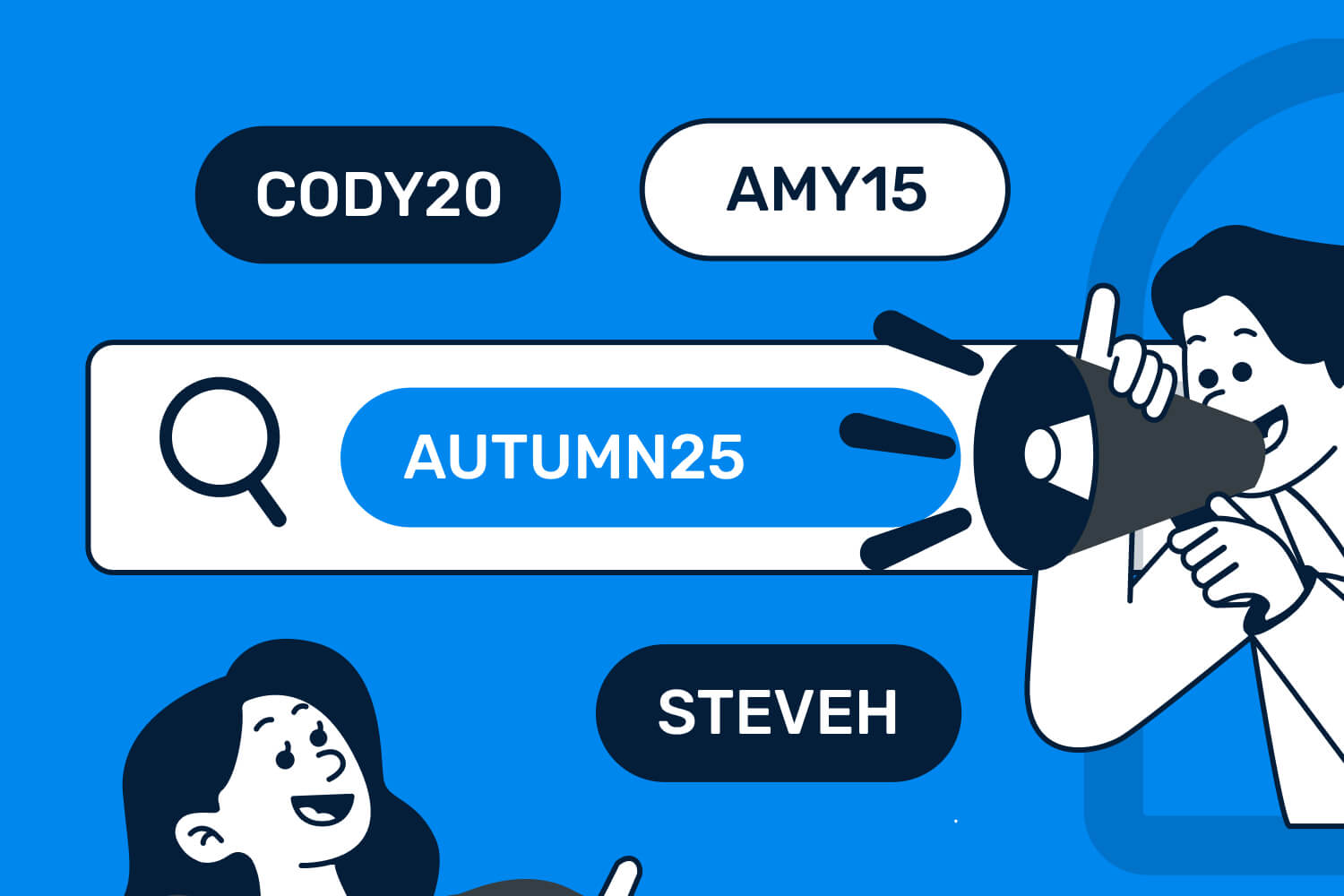
Why do AI tools recommend coupon codes so consistently? Because a coupon code is a self-contained, verifiable claim. “SAVE20 gives you 20% off at checkout” gives the code, the benefit, and the place to redeem it in one sentence.
When an LLM assembles a purchase-intent answer, it gets a lot of input from the sites that dominate that corner of the web: deal aggregators, review roundups, YouTube description boxes, Reddit threads.
Those sources repeat codes verbatim, in identical form, across thousands of pages, and they rank for the discount-flavored queries that trigger a purchase-intent answer in the first place. Agreement across independent sources is precisely what makes an AI model confident enough to put something in an answer. Twelve sites confirm that SAVE20 exists, so SAVE20 goes in the response.
At the same time, a tracking link has none of these properties. Take a URL such as yourbrand.com/?via=sarah. A person can see where it leads, but the commercial meaning lives in the referral parameter. The page may help an AI system formulate its answer, yet the assistant can cite or summarize that page without reproducing the parameter that credits Sarah.
The link is also usually unique to one affiliate. That is exactly what makes it useful for attribution, but it means the URL itself is not a broadly repeated fact in the way a coupon code can be.
This does not mean AI systems cannot read pages containing affiliate links. It means the useful part of the link is easy to lose when information moves from the original page into a generated answer.
Why Affiliate Tracking Links Still Matter
The version of this insight circulating on LinkedIn right now skips straight to a verdict: affiliate links are dead, switch your program to codes, thank me later.
We'd ask you to slow down before revamping anything, partly because AI answers are a single distribution channel among the several your affiliates already work, and partly because this wise LinkedIn verdict ignores what you'd be giving up. Because no, much like affiliate marketing, affiliate links are not dead.
Pushing every affiliate toward codes discards what tracking links do better than any other instrument: describing the path to the sale.
A conversion through a link tells you which page sent the customer, which piece of content did the persuading, and whether that affiliate opened the relationship or closed it. That's pure gold in our biz.
That is why first-touch versus last-touch attribution settings exist at all. The answer changes who gets paid, and over time, which affiliate behavior your commission budget is funding. A conversion through a code tells you that the code was used. Whether the customer found it inside your affiliate's carefully researched review or copied it from an aggregator thirty seconds before checkout is information the code cannot and does not carry.
It depends entirely on your strategy whether this information is valuable to you or not. We can't judge that.
But for most programs, that blind spot is the familiar weakness of coupon code affiliate programs that run on codes alone: they reward whoever holds the code at the moment of purchase, and that is regularly a different party from whoever created the demand.
It's the reason Rewardful supports coupon code tracking AND link tracking. Codes belong on the surfaces where links can't survive. Links belong everywhere the attribution detail matters. Running both has been possible for years. The new development is that the split between them now shapes your AI search visibility.
Coupon Codes vs. Affiliate Links: What Each One Does Best
The question is not “codes or links?” It is “what needs to survive in this channel?”
For many SaaS affiliate marketing programs, the third option will be the most useful. The mix should still depend on the affiliate’s content, audience, and role in the buying journey.
When to Give an Affiliate a Code, a Link, or Both
Many programs give every new affiliate a tracking link because that is what the signup flow generates. Nobody actively chose links over codes; the platform made the choice, and the team moved on. Answer Engine Optimization gives affiliate managers a reason to revisit that default. Make the decision by content type instead.
There will be grey areas. A comparison blogger with a loyal readership may deserve both. A consultant might prefer a code that is easier to share on calls. A YouTube creator may generate most conversions through a description link even though the spoken code gets more attention. The most important thing is that your own affiliate program data should make the final decision.
How to Audit Affiliate Visibility in AI Answers
Do not redesign your affiliate program around a few screenshots on LinkedIn. Run an audit instead.
1. Build a Prompt Set Based on Real Buyer Intent
Start with 10 to 20 questions a potential customer might ask, including:
- “Best tools for [your category]”
- “[Your product] discount.”
- “Is there a coupon code for [your product]?”
- “[Your product] vs. [competitor].”
- “Best alternative to [competitor].”
- “Is [your product] worth it?”
2. Record What Appears and What Survives
Run the same prompt set across the AI products your buyers are likely to use. For each answer, record:
- The date and AI product tested.
- Whether your brand appears.
- Which page or domain is cited.
- Whether the source belongs to an affiliate.
- Whether that source contains a code, a link, both, or neither.
- Whether the displayed citation retains the affiliate parameter.
- Whether the answer reproduces the offer accurately.
3. Compare Visibility With Program Performance
AI visibility is useful only when it supports a business outcome. Compare your audit with:
- Affiliate clicks.
- Code redemptions.
- Attributed trials or sales.
- Conversion rates by partner and mechanism.
- Code leakage or unexpected redemption sources.
- First-touch and last-touch patterns.
This comparison helps you avoid rewarding visibility that produces no customers, or removing links that still provide valuable attribution.
4. Repeat the Same Audit Quarterly
Keep the prompt stable enough to compare results over time. If codes consistently appear in high-intent answers and produce incremental conversions, issue more of them. If affiliate comparison pages earn citations and their links continue to drive signups, invest in those pages. If neither happens, the problem may be the content rather than the tracking mechanism.
Update Your Affiliate Program Onboarding
Once you know what works, let your affiliates know. Explain when affiliate partners should request a code, when they should use a link, and when they should use both. Add examples to your affiliate onboarding materials and campaign briefs. In particular:
- Recommend codes for video, audio, live presentations, and deal-intent content.
- Recommend links for written recommendations and relationship-driven referrals.
- Recommend both when the audience may either click immediately or return later to buy.
- Explain how credit is assigned if a customer clicks on one affiliate’s link but redeems another affiliate’s code.
From our experience at Rewardful, a hybrid strategy works only when partners understand how attribution and commissions will be handled.
Our Recommendation? Track Coupon Codes and Affiliate Links Together
AI visibility does not make affiliate links obsolete; it makes the division of labor clearer. Use coupon codes when an offer needs to survive across AI answers, videos, podcasts, and other environments where a clickable URL may disappear. Use affiliate links when you need stronger referral and journey data. For many affiliates, the right answer will be both.
If your audit shows that more partners need codes, our guide to affiliate coupon code types and strategies explains how to choose between evergreen, limited-time, and vanity codes while reducing code leakage.
Rewardful tracks affiliate links and coupon codes in the same program, so you can expand your AI visibility without abandoning useful attribution data. Start your free 14-day trial today.