
Relying solely on inbound methods limits the growth potential of your affiliate program.
Sure, you might get some signups through blog posts or referrals, but the reality is: the best affiliates are usually not the ones discovering your program on their own. They’re busy creating content, reviewing tools, and monetizing through programs they already know.
To reach them, you need to go outbound.
What is outbound affiliate recruitment?
Outbound affiliate recruitment is all about actively identifying and contacting potential affiliates rather than waiting for them to stumble upon your program (making sure people can discover your affiliate program is equally important, but that’s the story for another article).
Instead of relying purely on discoverability through SEO, social proof, or directories, you take control of who you want to work with.
It’s a strategic move for a few key reasons:
- You get to choose affiliates who match your niche and voice. Instead of casting a wide net, you can hone in on affiliates that resonate with your brand, speak your audience’s language, and promote in ways that align with your values.
- You target publishers already creating relevant content. These partners don’t need to be convinced of your industry’s value. They're already talking about similar tools or problems you solve. This dramatically shortens the education cycle.
- You focus on affiliates with a track record. You can identify partners who have already demonstrated success in promoting similar products (we’ll focus on this specific process later in the article).
Think of it as sales prospecting for partnerships. You’re not waiting for leads to walk into the store. You’re going out and inviting your best-fit customers to a VIP experience.
And here’s the best part: outbound is a perfect addition to passive recruitment strategies.
You can (and should) still:
- Submit your affiliate program to the “best affiliate programs for [your niche]” listicles
- Include a link to your affiliate program in your website's footer or the main navigation
- Mention your program in blog posts, newsletters, or customer onboarding flows
- Offer access to an affiliate program to link-building partners
These passive methods help build awareness and attract inbound interest, but they leave growth up to chance. Outbound fills the gaps. It ensures you’re not missing out on ideal partners just because they didn’t hear about you yet. Plus, you get feedback on your product and your affiliate terms from those actively participating in competing programs.
Why actively recruiting affiliates to your program is crucial for growth
I’ll just add this picture that shows the sales revenue from our affiliate program.
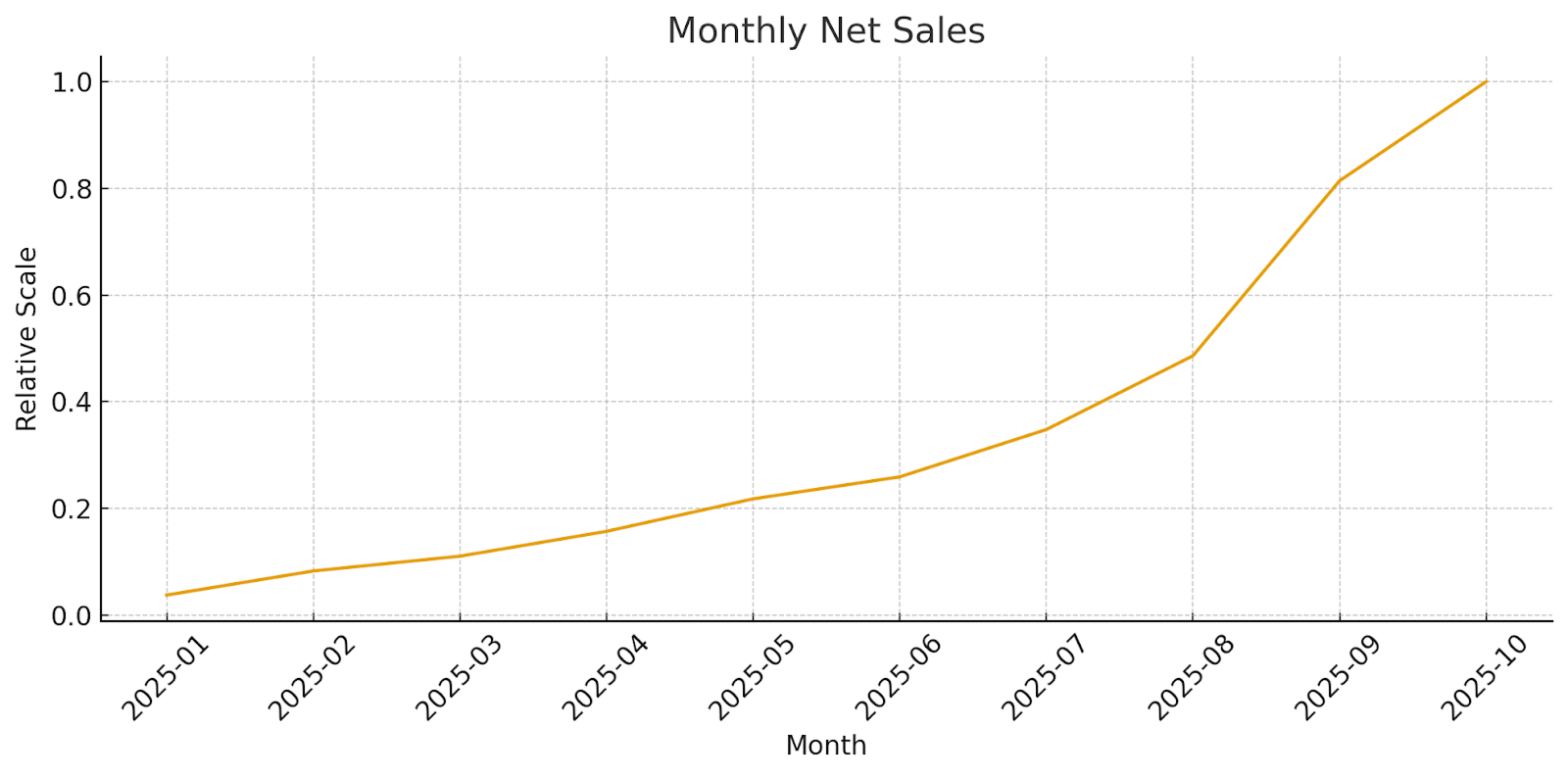
Before 2025, our program was more of a “set it and forget it” system. We were getting early traction, but we weren’t doing much to nurture existing affiliates or find new partners similar to our top performers.
The result? Our affiliate program struggled throughout 2024.
At the start of 2025, we made a shift. We began actively recruiting affiliates and providing them with the necessary tools to succeed. And the results speak for themselves: we grew our affiliate program revenue by 10x, and it continues to climb at a steady MoM rate.
In this article, we’ll walk you through the exact process we used to identify and recruit the right affiliate partners so you can promote your business more effectively and grow revenue together.
5-step process to nail your outbound affiliate recruitment
Step 1: Define your ideal affiliate profile (IAP)
Outbound success starts with clarity. You need to know who you're targeting.
We start by analyzing our existing affiliate data in Rewardful.
Simply navigate to the ‘Affiliates’ section and export the full list as a .csv file for in-depth analysis.
From there, we segmented our partners into two groups:
- Primary IAP: These are the affiliates driving the most paid conversions. For us, they typically run blogs or newsletters focused on SaaS tools, marketing, or entrepreneurship, and they have a track record of converting readers into customers.
- Secondary IAP: This group generates leads (free sign-ups) but hasn’t yet proven it can convert free users into paid ones. They often operate in the same niches, resulting in considerable overlap, but may require more nurturing or education to unlock their full potential.
Once segmented, we proceed to the enrichment phase. The goal is to gather as many details as possible about affiliate partners and the companies they represent.
Using Hunter’s Combined Enrichment API, we enriched each affiliate’s email address to get more clarity on:
- Company and website data to understand the kind of content they publish, traffic volume, and topical focus.
- People data to identify the actual individuals behind the blogs or media outlets. These are typically the decision-makers or content creators we contact directly.
The enrichment process is crucial for getting a clear understanding of your ideal affiliate profile. This is the starting point of our outbound recruiting process, as it helps us avoid generic outreach and build campaigns that speak directly to affiliates who are the best fit.
Using the API helped since we had hundreds of partners to analyze. That said, if you’re just starting out and don’t have a huge base of affiliates yet, you can totally do this manually.

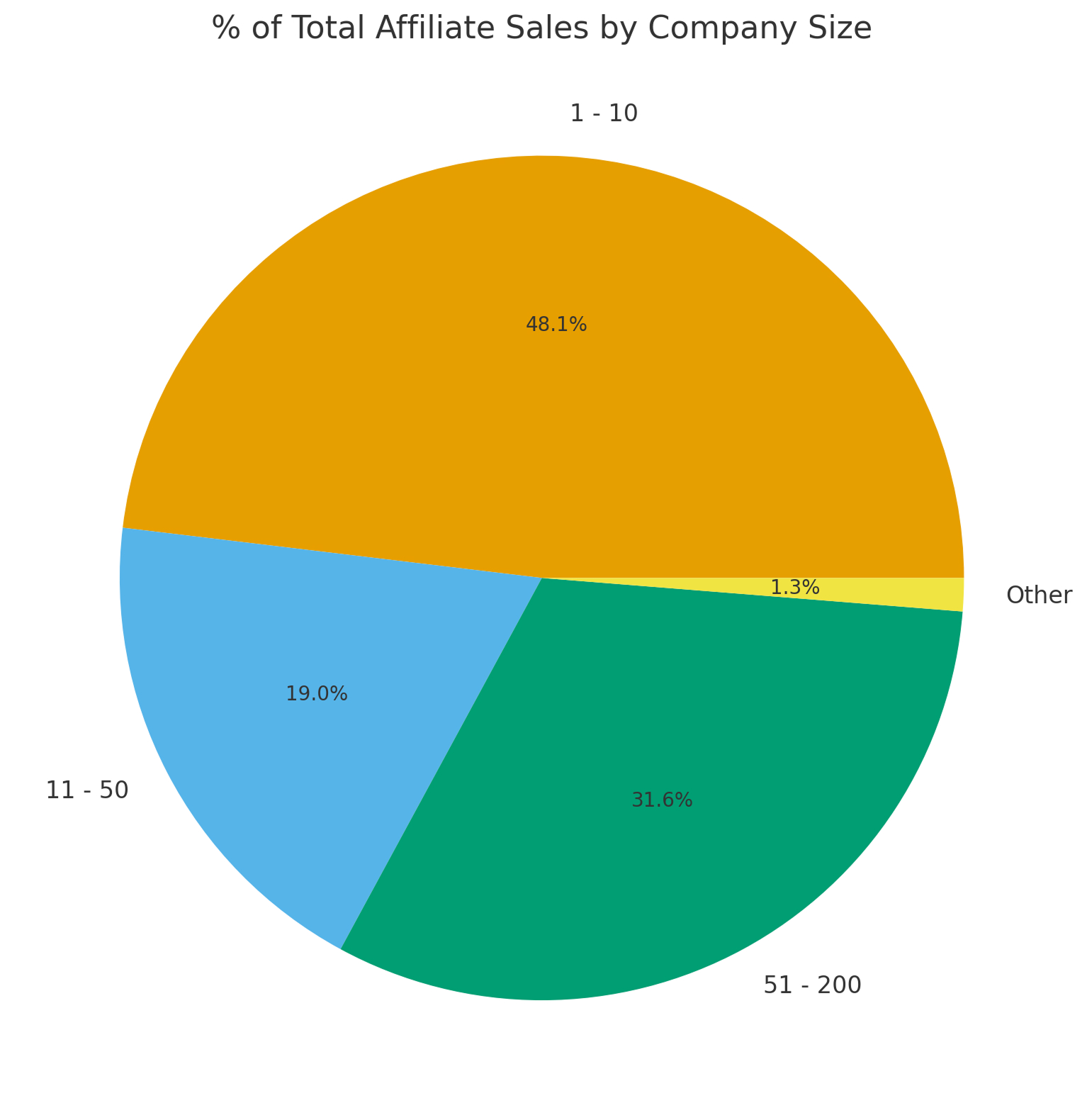

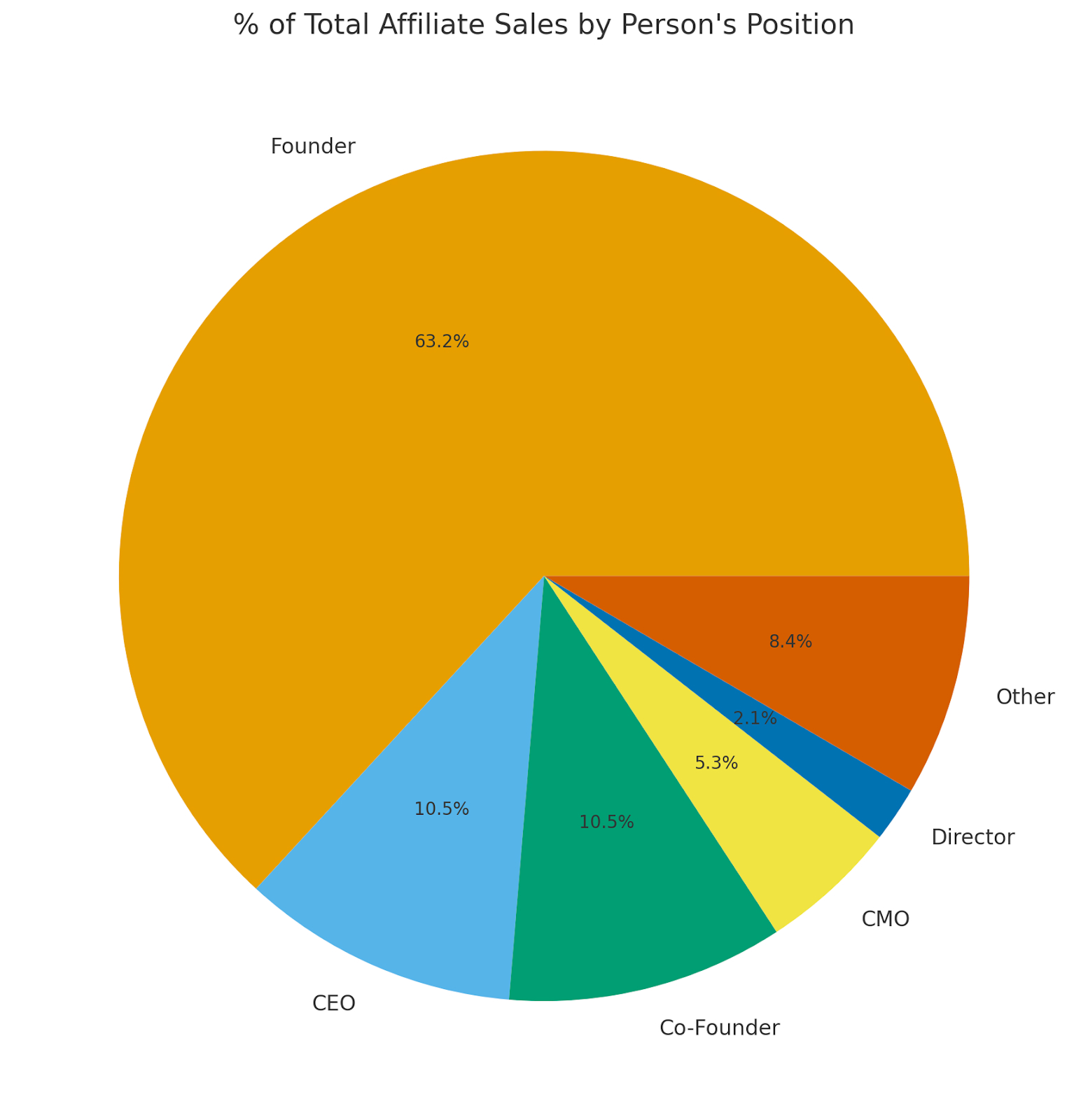
By the end of this process, we had a list that didn’t just contain websites and emails—it included:
- Companies we wanted to partner with, along with insight into their location, industry, size, revenue, and content style
- Key people in those companies, along with their job titles and likelihood of engaging with our outreach
This foundation enabled every step, from prospecting and outreach to sequencing and onboarding, to be faster, sharper, and more effective.
Before scaling, we did a small experiment. We investigated identifying additional companies that are similar to one of our top-performing affiliate partners. Hunter’s B2B database enables us to set company filters (based on the IAP analysis) and focus solely on identifying similar companies to our top-performing affiliates. Literally, in seconds, we come up with a list of thousands of potential companies and a few thousand potential people to contact.
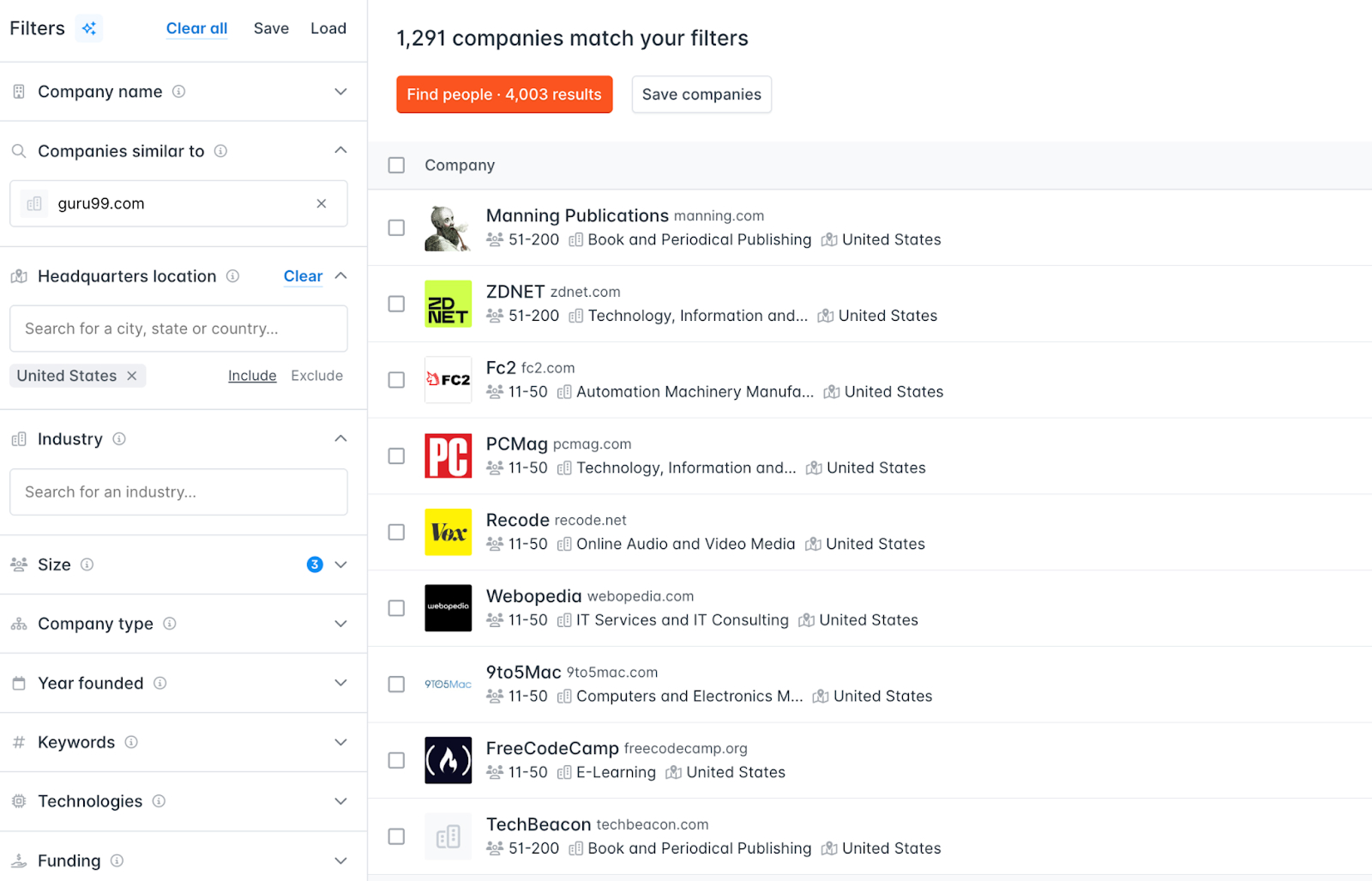
Not all of these companies are relevant, so you’ll need to do some cleaning, but it’s a great start. We launched a couple of small outreach campaigns just to test the waters before scaling.
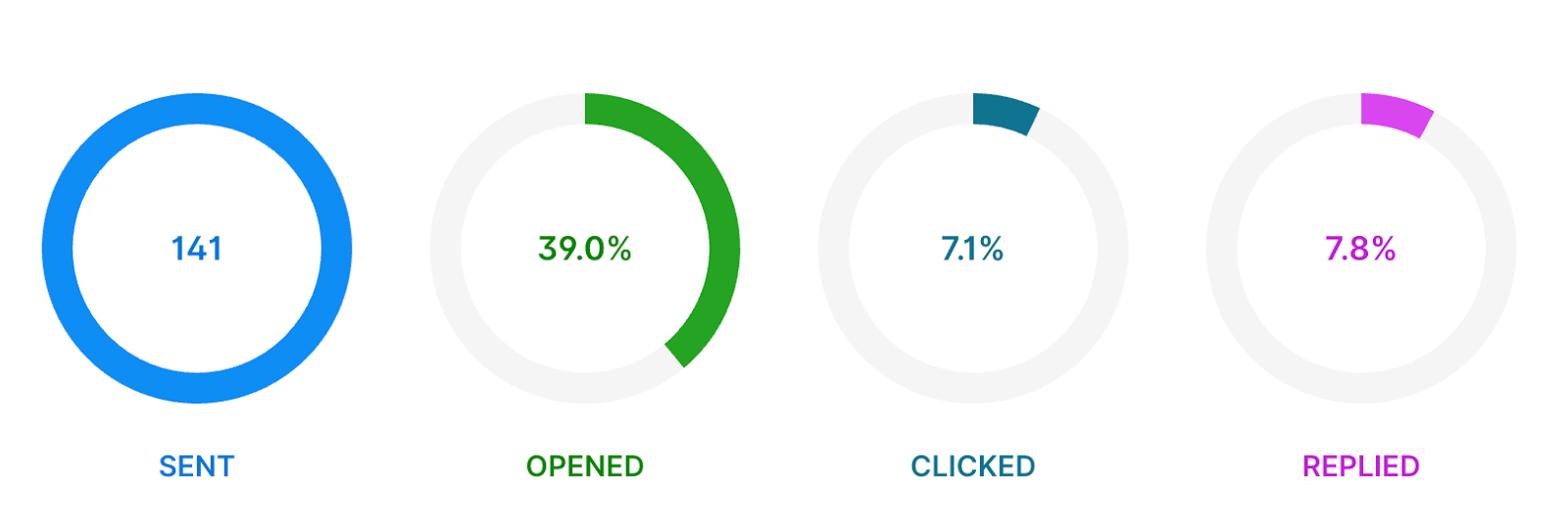
7.8% reply rate from a campaign we built in 30 minutes was good enough to start experimenting and scaling.
Step 2: Build a prospect list
With a clear ideal affiliate profile, the next step is building a targeted and data-rich prospect list of affiliates we want to reach out to.
This isn’t just a matter of scraping a few emails. It’s a layered process that combines SEO signals, market mapping, and smart automation.
Start by identifying tools offering affiliate programs
Before we can find affiliates, we need to know which tools they might already promote.
We typically begin by identifying our direct competitors and their affiliate programs. From there, we expand into adjacent categories by identifying pages that rank for:
- “Best affiliate programs for SaaS”
- “Affiliate programs for marketers/creators / B2B tools”
- “Best recurring affiliate commissions [year]”
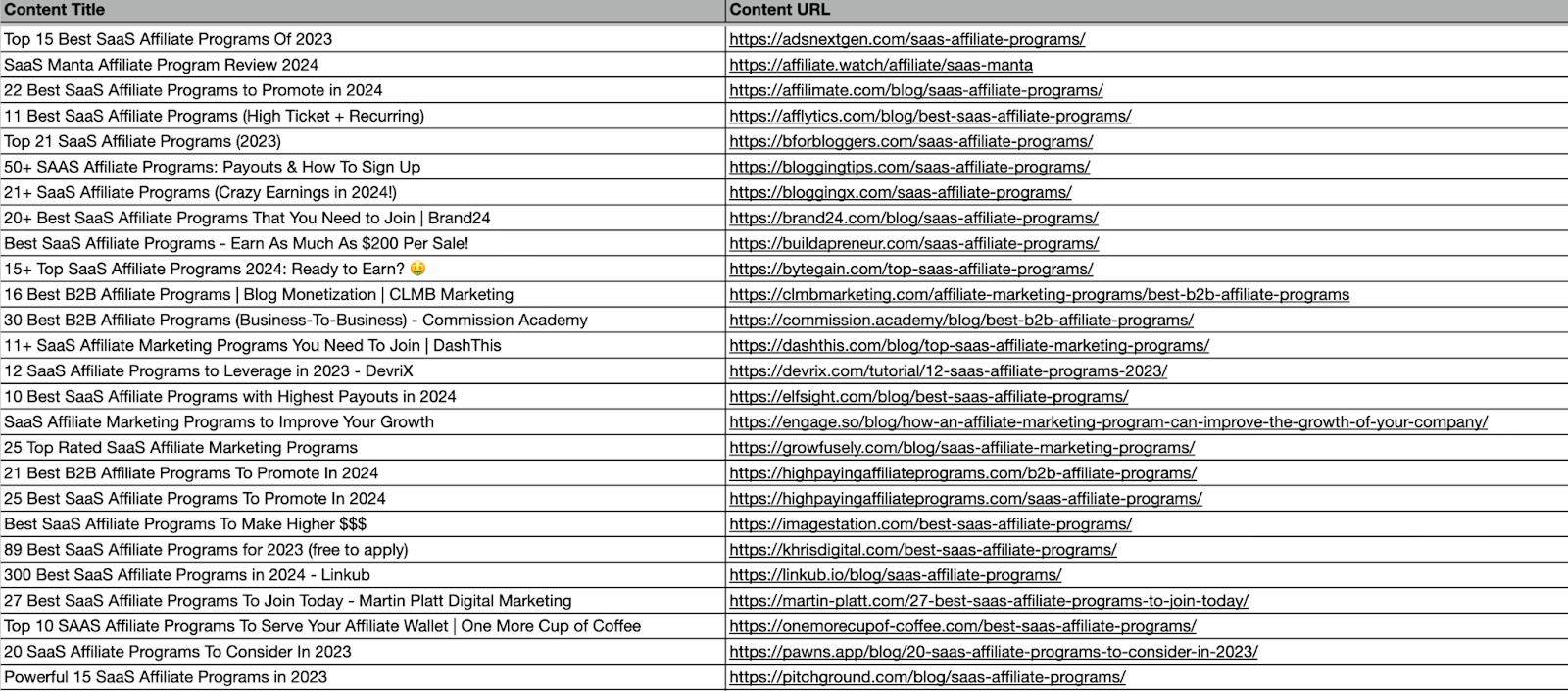
These listicles are incredibly useful. They don’t just show which tools have affiliate programs, but also indicate which ones are being actively promoted in the affiliate marketing community.
Additionally, you can always reach out to the websites that publish listicles and include your affiliate program on their site. It’s a great way to attract the right affiliates passively, in addition to running an outbound recruitment campaign.
As we build this list of tools, we also capture key program details in a spreadsheet:
- Commission rate
- Cookie duration
- Payout method
- Program landing page
This provides context when we reach out to affiliates later. We can reference competing offers or demonstrate how our program compares (e.g., better rates, longer cookies, etc.).
Use Content Explorer to identify relevant sites
Once we have a solid list of businesses that have an affiliate program, we head over to Ahrefs Content Explorer to find the actual websites promoting them.
We search for:
- “[Tool name] review”
- “[Tool name] alternatives”
- “Best tools for [problem the tool solves]”
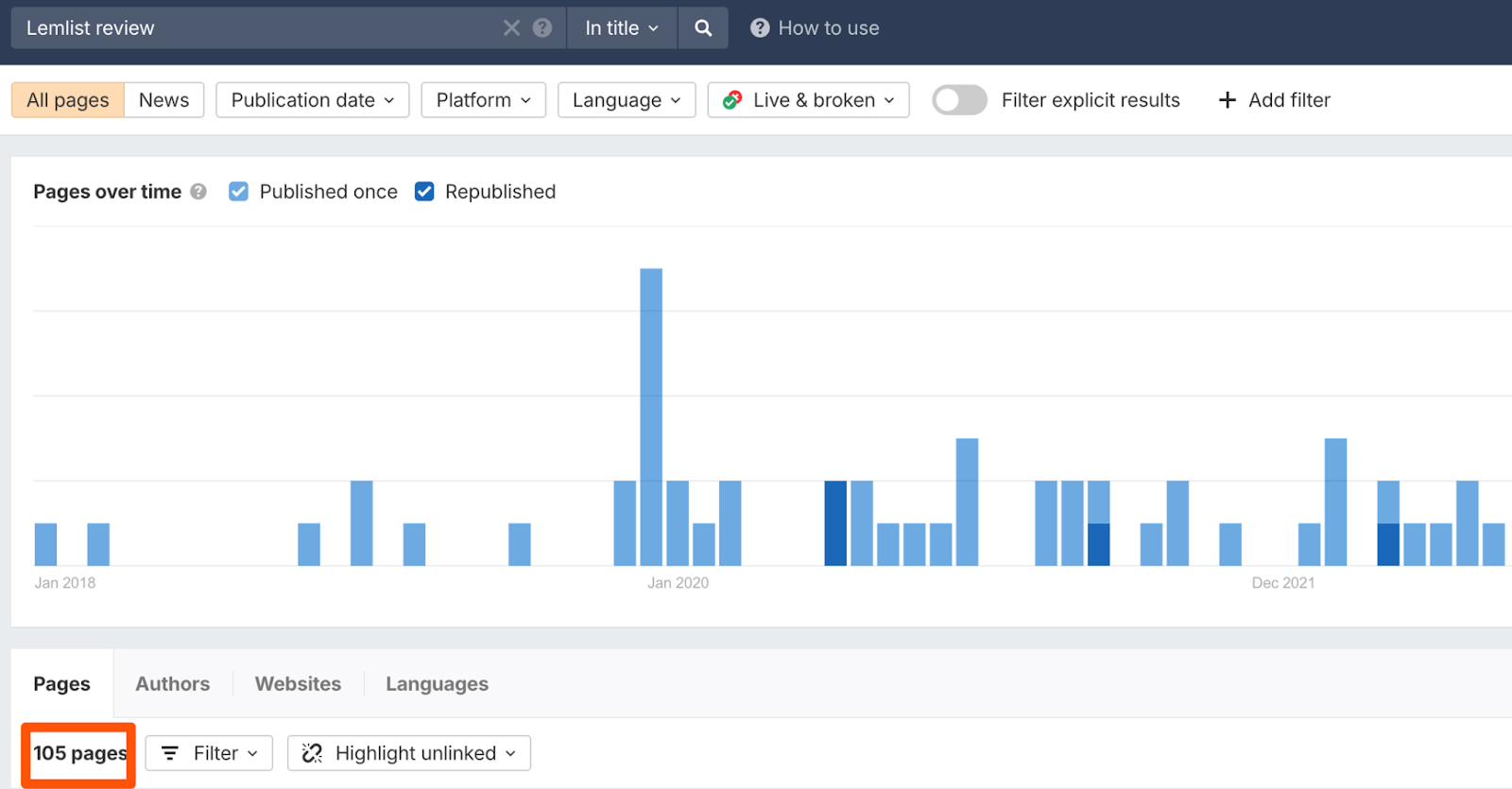
These queries surface content-rich pages likely written by affiliates.
We then apply filters like:
- Language: English only
- Domain Rating: 30+ (to filter low-quality sites)
- Traffic: 500+ visits/month (to ensure audience reach)
- Date published: within the last 12 months (to target active publishers)
This step provides us with a broad yet relevant dataset.
You can repeat this for each competitor and the relevant tool you identified in a previous step. In our case, we got a list with more than 20,000 rows. You’ll soon notice not all are relevant.
Clean your initial list
A list that big isn’t useful unless it’s qualified, so we built a custom Google Apps Script to help us score and clean it.
The script:
- Checks domain structure (/blog vs homepage)
- Filters out irrelevant domains (.edu, .gov, forums, communities)
- Flags affiliate-related language (e.g., “disclosure,” “affiliate links,” “sponsored”)
- Cross-references domains with our IAP attributes
This process reduced our list to ~4,000 high-potential affiliates, ranked and ready for enrichment.
Reverse-engineer competitor affiliate networks
To add another dimension, we reverse-engineered our competitors’ affiliate networks by identifying common affiliate link structures such as ?via=, ?ref=, /aff/, /go/, ?partner=.
Using Ahrefs’ Backlink Reports, we searched for these URL patterns and pulled referring domains.
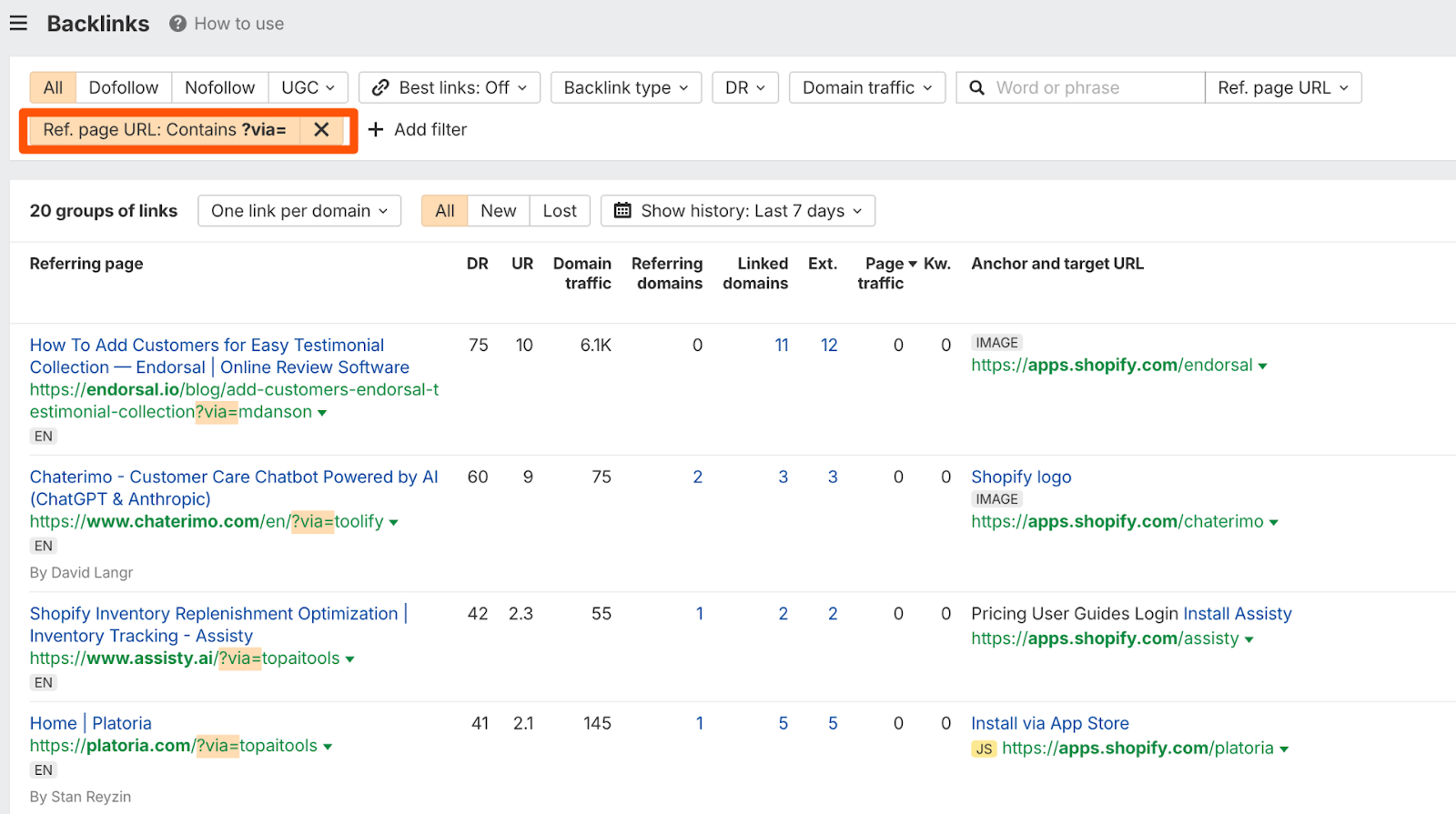
While some competitors actively hide their affiliate links, we still surfaced a number of hidden gem sites, often high-converting affiliates that never appeared in standard listicles.
By the end of this step, you’ll have:
- A refined and IAP-qualified list of affiliate sites
- A secondary list of active tools with affiliate programs, including detailed program data
- A library of affiliate-friendly blogs with a known history of promoting similar products
- A scalable, repeatable system for prospect identification
Step 3: Find the right people to contact
Once you have a list of affiliate-fit websites, the next question is: Who should you contact exactly?
Affiliate programs are driven by people, not domains. So this step was all about identifying the decision-makers behind the content, newsletters, or growth teams.
Leverage your IAP analysis to define target roles
We already knew the types of people most likely to be involved in affiliate decisions based on segment:
- Solo creators for independent blogs and newsletters
- Founders or growth marketers for small SaaS companies and review platforms
- Content managers or partnership leads for more established media publishers
But job titles vary wildly on LinkedIn and enrichment platforms, so instead of guessing, we used ChatGPT to generate a broader list of relevant titles.
We prompted it with something like:
“List 20 job titles that solo creators, growth marketers, or partnership leads might use on LinkedIn if they’re responsible for content or affiliate marketing.”
This gave us a list of following job titles:
- Blogger
- Content Strategist
- Marketing Lead
- Growth Hacker
- Partnership Manager
- Editor-in-Chief
- Publisher
- SEO Specialist
- Revenue Operations
- Affiliate Program Manager
Having this expanded list meant we weren’t just searching for “Founder” or “Head of Marketing”, but we had more variations of job titles that are likely responsible for affiliate marketing and partnerships.
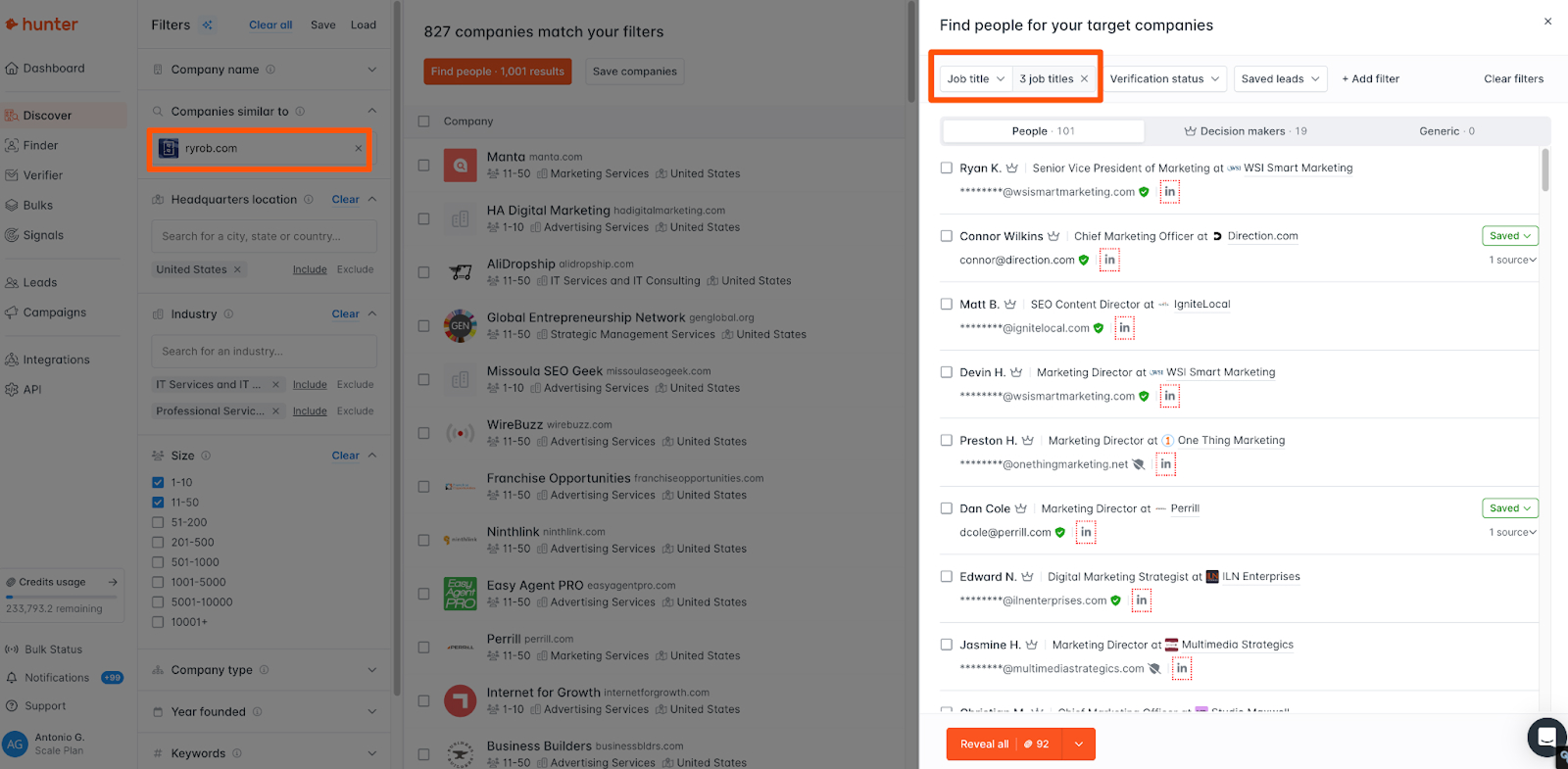
The fastest way to translate this to practice is by using Hunter Discover’s filters:
- Companies similar to: type your best-performing affiliate partner’s domain
- Location, industry, and size: use data from your ideal affiliate profile research (refer back to Step 1)
And then you can directly find decision-makers from the same place.
Type in job titles you are looking for. To make it broader, I suggest using job titles that include words like editor, content, marketing, affiliate, growth, and SEO.
We would also use LinkedIn to supplement our research in Hunter to increase our reach.
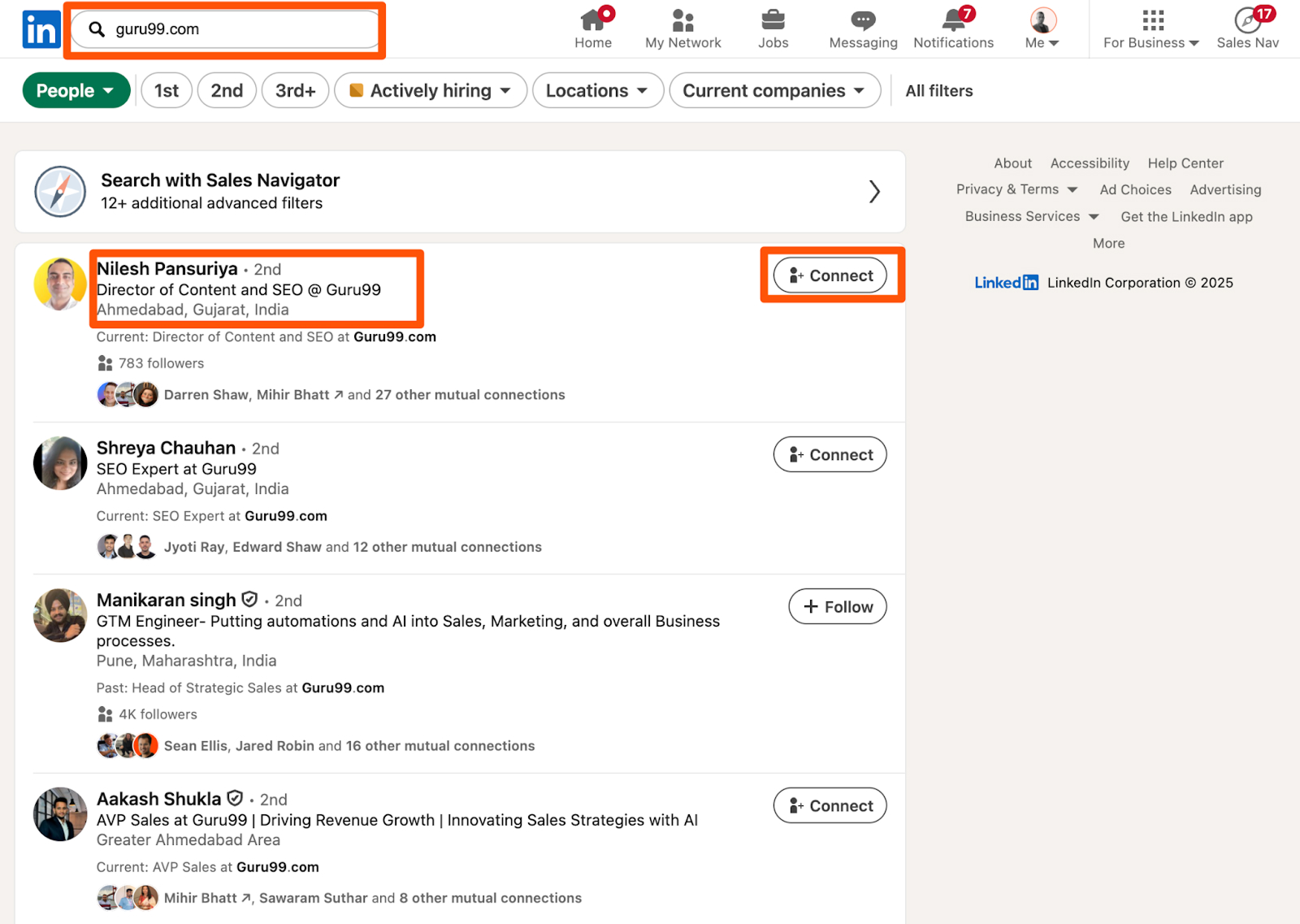
This layered approach helped us identify the person who is most likely responsible for their affiliate marketing efforts.
Step 4: Craft personalized emails
Once we’ve identified the right person to contact, the goal is to connect in a way that feels personal.
We’re not blasting generic emails. We’re starting meaningful conversations with people who are likely to care. Our research indicates that 73% of decision-makers genuinely value personalization, and 61% want to receive cold emails that feel relevant to them.
Write cold emails that actually sound human
After having a list of decision-makers to contact, the next step is to craft a highly relevant email sequence. To do this, we use AI’s help to provide us with the initial email, and then we refine it. You can start by writing a prompt like this to ChatGPT:
“You are an outreach manager who is writing a cold email to recruit potential affiliate partners. Write a friendly cold email to a blogger who reviewed [Tool X] and [Tool Y]. Reference their post about [Tool X], suggest reviewing our tool (which solves the same problem), and offer details about our affiliate program. Keep it brief (under 100 words), personal, and non-pushy. Make sure to use short paragraphs.”
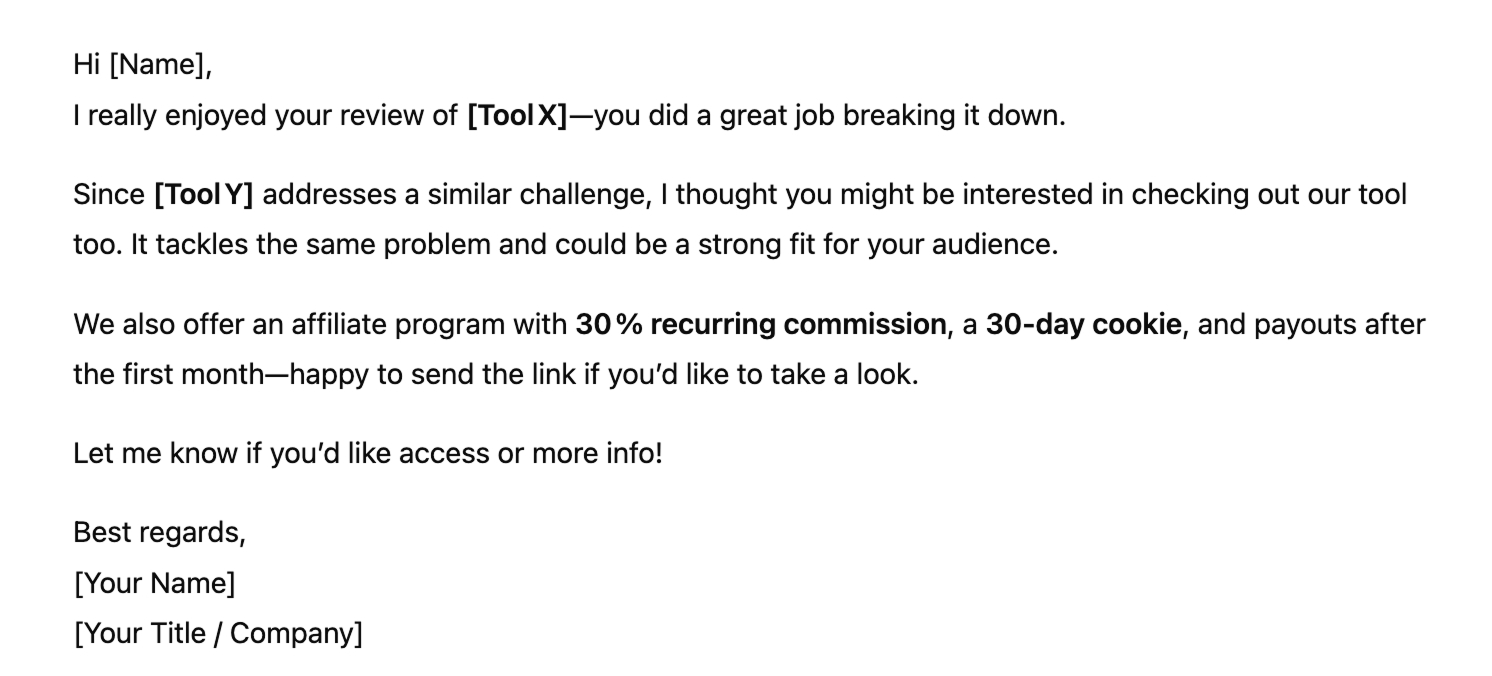
The initial email is a great starting point, but at this stage, it looks generic. In the following text, we will talk about refining your email and write a few variations to test against each other.
Hunter’s State of Cold Email finds that 67% of decision-makers are not opposed to AI-written emails, as long as these are tailored to their specific needs and do not sound generic.

Here is the example of the successful affiliate recruitment email we sent during Q2:
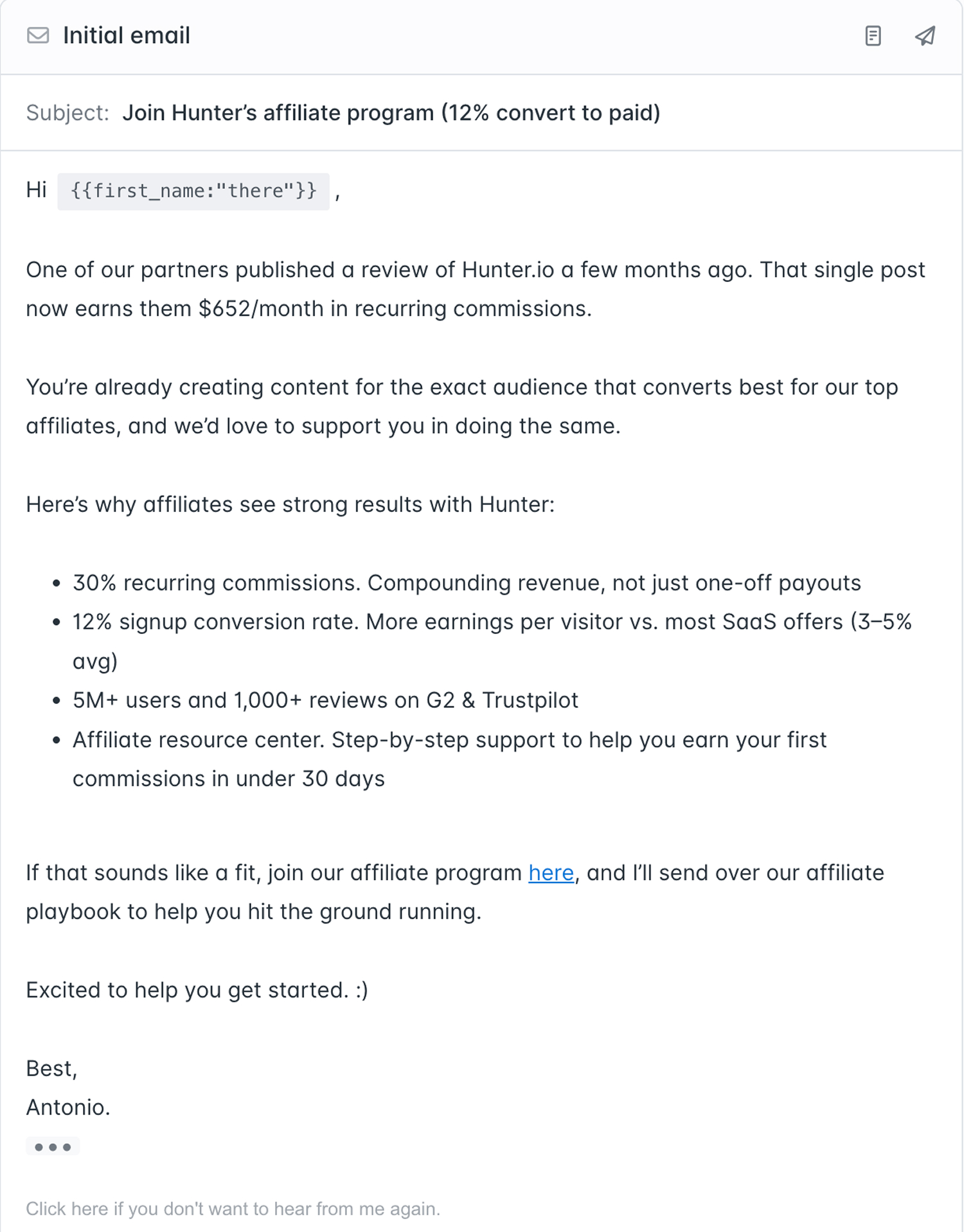
Tips to write affiliate recruitment emails that convert
Cold outreach works when it feels relevant, human, and easy to say yes to. Over time, we’ve learned that the smallest tweaks often have the greatest impact on reply rates.
Personalize with purpose.
Go beyond using their name. Reference a review they published, a topic they cover often, or the type of audience they serve. When they feel the email is written for them, they’re far more likely to reply.
Keep your subject line simple.
Short, clear lines outperform clever ones. Aim for relevance over creativity. Think “Quick question about your [Tool] review” or “For your SaaS tools content.”
Write like a human.
Get to the point immediately, keep paragraphs short, and focus on why this partnership benefits their audience. Share one meaningful detail about your program, not ten. Focus on what’s in it for them.
Use a low-friction CTA.
Instead of asking for a call, try: “Want me to send the affiliate kit?” or “Would you be open to taking a look?”
Follow up with value.
Half of the replies come from follow-ups. Space them a few days apart and add something useful, such as a success story, a new angle, a valuable resource, or even a short screen recording showing how things work.
Go plain text.
Skip HTML and open tracking. Plain-text emails are better for deliverability.
If you feel stuck, here is the CustomGPT I created that helps me improve my cold emails. You can paste your initial email, and it will give you suggestions for improvement.
Step 5: Build multi-touch sequences
One-off message rarely gets the job done.
To turn outreach into results, you need a structured, multi-touch sequence—designed to engage prospects across different channels, over time, and with increasing value.
That’s why we don’t just send one email and hope. We build automated outbound workflows that focus on relevance, timing, and relationship-building.
Every outreach campaign we run follows a simple but flexible sequence:
- Email 1: Personalized intro
Short, conversational, and anchored in relevance—mentioning their content, their audience, or a specific tool they reviewed. - Email 2: Value reminder or incentive (3–5 days later)
Share a benefit of the program, an example of affiliate earnings, or a unique selling point (like recurring commissions or exclusive content support). - Trigger: Engagement with email
If the recipient opens an email but doesn’t respond, we send them a LinkedIn connection request that references the original email:
“Hey [Name], I sent over an email recently about a potential affiliate partnership—wanted to connect here too in case it’s easier to chat! - LinkedIn message follow-up
After connecting, we send a light follow-up message a few days later, maintaining a casual and value-oriented tone. - Email 3 (optional): Social proof or case study
For warm leads or high-potential partners, we send a final email with a short success story or partner testimonial to reinforce the opportunity. Affiliates love to see the proof others are already successful.
Automate, but don’t spam or sound generic
We automate scheduling, tracking engagement, and triggers, but we keep the messaging human.
Each step is:
- Short and to the point (3–5 sentences max)
- Specific to their site/niche
- Easy to reply to
The goal isn’t to flood their inbox or DMs. It’s to create small touchpoints that build familiarity and trust.
Why follow-ups matter (a lot)
Here’s the kicker: ~60% of our total replies come from follow-ups.
Most people don’t respond to the first message, not because they’re uninterested, but because they’re busy, they missed the email, or it might not be the right time for this.
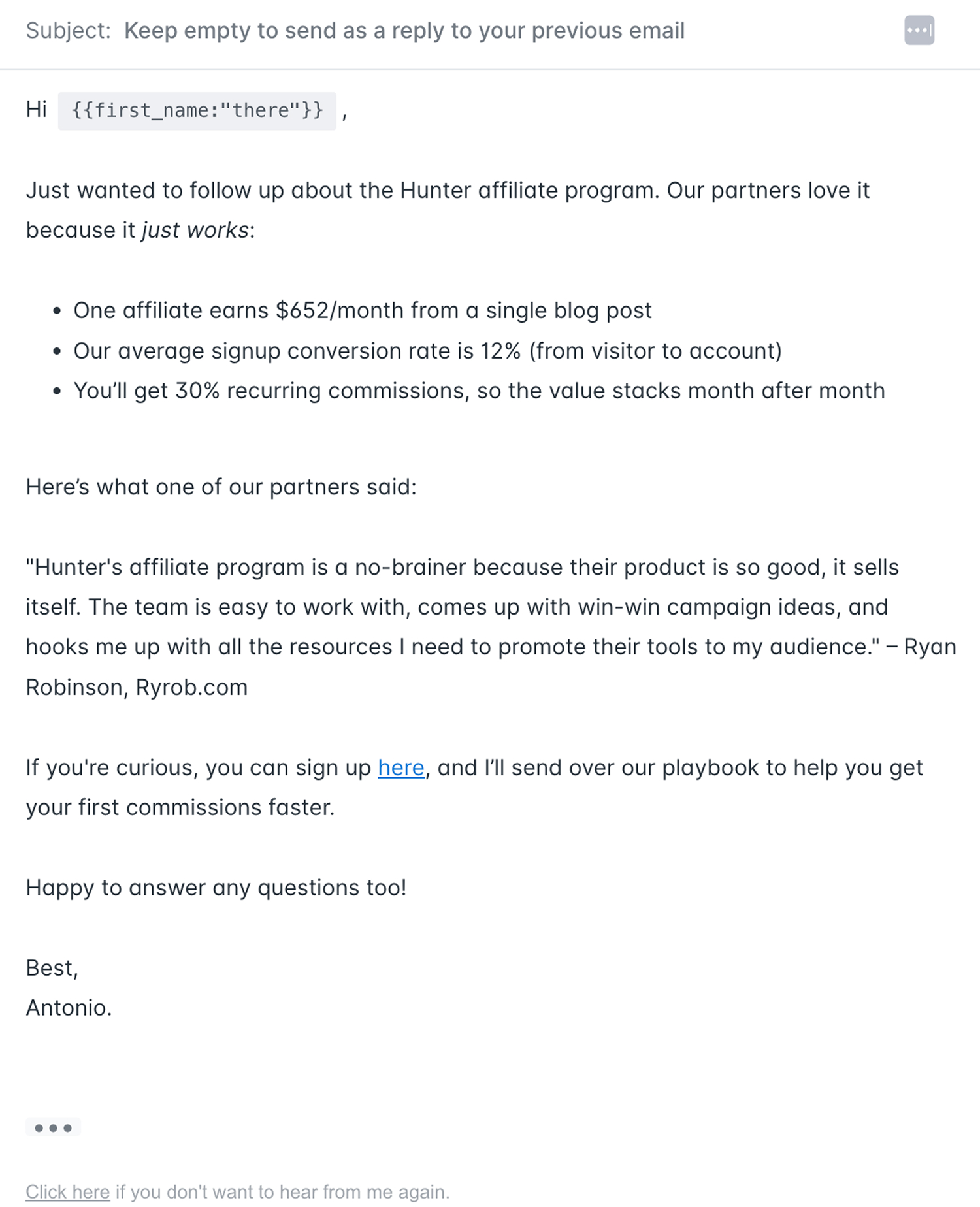
That’s why follow-ups are baked into every sequence. But we never send “just checking in” emails. Every follow-up adds value:
- A stat about affiliate earnings
- A quote from a current partner
- A resource we created (e.g., blog post, banners, onboarding toolkit)
- A new angle on why their audience would benefit
Here is an example of one of our follow-ups:
And you’ll notice that the follow-ups actually account for almost 50% of all responses:

Lesson learned: If you don’t send follow-ups, you’re missing out.
Sending follow-ups is simple. We use Hunter’s cold email tool, which allows us to build follow-up sequences in seconds.
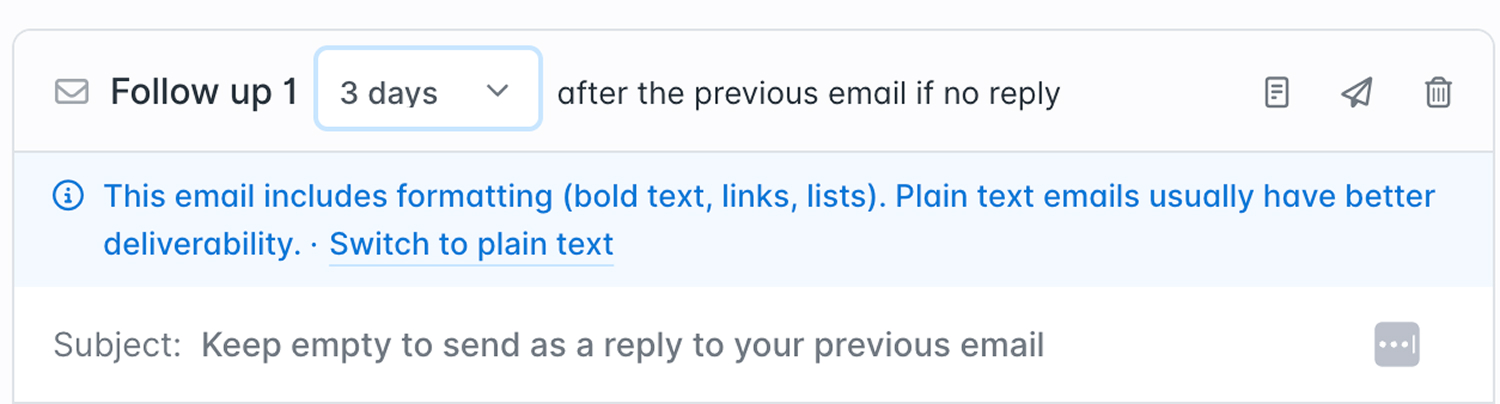
We suggest sending a follow-up email three days after the previous one if you don’t receive a reply. Also, keep your follow-ups in the same thread as the initial email to maintain the conversation's context.
Extra tip: leverage existing customers
While this isn’t a traditional outbound tactic, it’s one of the highest-ROI recruitment channels we've implemented, and it works beautifully in combination with cold outreach.
We actively tap into our customer base because happy users are often the best affiliate partners.
Here is what we do.
- Scrape a list of our customers
- Enrich their company data
- Run the script that will match our ideal affiliate profile with their company data
- If there is a match, we would add them to our evergreen recruitment campaign
- And that’s it! Since they are already customers, the campaign itself isn’t as cold anymore, and the reply rates we’ve seen are close to 20% (compared to 8% for cold outreach).
Survey your customer base
A few times per year, we send targeted surveys to a specific segment of our customers, typically those who are:
- Actively using the product
- Showing signs of satisfaction or advocacy
- In niches likely to share or write about tools
These surveys help us gather feedback, but they also include a simple question that quietly powers our affiliate recruitment funnel:
“Would you be interested in joining our affiliate program?”
(✅ Yes / ❌ No / 🤔 Maybe later)
This allows us to identify potential affiliates with minimal friction and without a traditional cold pitch.
Results
Since launching our outbound affiliate recruitment strategy:
- We’ve increased net recurring revenue attributed to the affiliate program by 10x
- Outbound now drives over 50% of our affiliate revenue
- Average response rates are around 15%, thanks to combining email and LinkedIn
Final thoughts
Outbound affiliate recruitment isn’t about spamming inboxes. It’s about strategic matchmaking. Define who you're looking for, then reach out with genuine value.
It takes more upfront effort, but the rewards are worth it: more qualified partners, faster growth, and a stronger affiliate program overall.
If you’re serious about growing your affiliate program, outbound recruitment is the answer.